
“I can’t draw” sometimes means “This does not look the way I pictured it.” It can also mean the blank page feels too open, someone else’s picture looks more finished, or the child is unsure where to begin.
You do not have to answer with a speech about talent. A smaller invitation can be more helpful: “Let’s try one thing and see what happens.” Art offers room for observing, choosing, changing, and playing, even when the first marks do not become the expected picture.
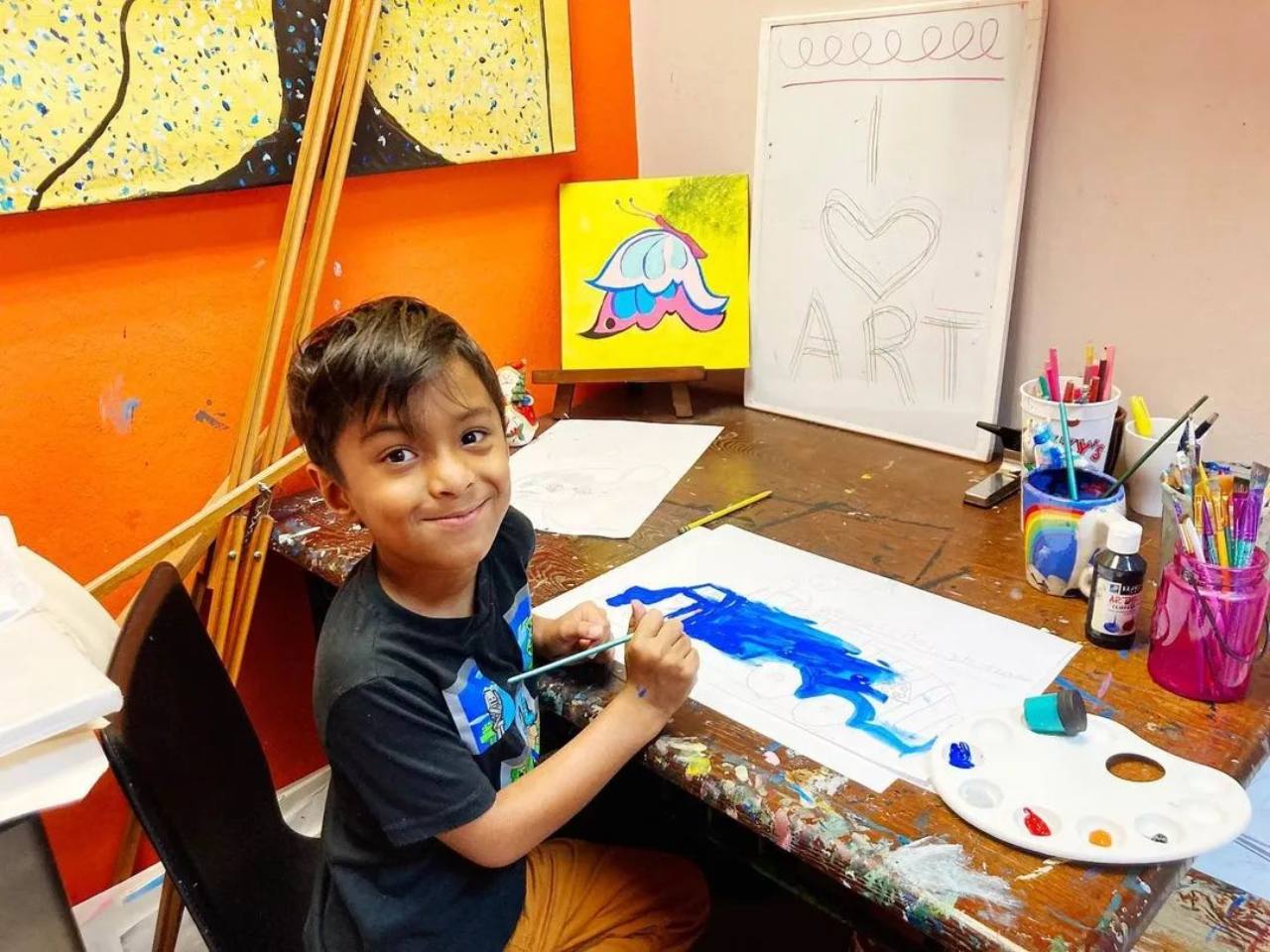
Give the page a small starting point
“Draw anything” sounds freeing, but it can be a lot to decide. Try a prompt with one clear beginning: draw three different kinds of lines, make a creature from five shapes, or use one color to show two different moods.
The prompt should open possibilities rather than prescribe a perfect result. Two people can use the same shapes and create very different pictures. That difference is a good reason to compare ideas, not to choose a winner.
Describe what you notice
Instead of guessing what a drawing is supposed to be, point to an observable choice. “You used a thick line around that shape” or “Those colors make that part stand out” gives the child something concrete to discuss.
Try asking, “What part would you like to tell me about?” They may be interested in a tiny detail you would not have noticed. Letting them lead can make the conversation less like a review of whether the picture is correct.
Try a different material or scale
A student who dislikes drawing a small picture with a pencil might enjoy a large sheet of paper, a collage, or painting broad shapes. Changing the material changes the task. A paper collage, for example, lets a child move pieces around before deciding where they belong.
You do not need to buy a full art supply collection. Start with materials appropriate to the child and the space you have. Keep the setup manageable, supervise tools as needed, and make cleanup part of the plan rather than a surprise at the end.
Keep an experiment page
Set aside a page that is allowed to be messy. Use it to test a color combination, practice a shape, or compare what happens with a light mark and a heavy one. Call it a place to find things out.
Adults can join without producing a model the child is expected to copy. Try the same prompt, make your own decisions, and say what you are experimenting with. It helps to show that changing an idea is a normal part of making something.
Let unfinished work stay unfinished
Not every experiment needs a frame, a photo, or a finished title. Sometimes a child discovers one interesting texture and is ready to stop. Sometimes they want to return later. Leave room for both.
If they ask for help, find out what kind: a demonstration, another idea, or simply someone to look with them. The aim is to keep the child involved in their own choices, with enough support to try again.
Looking for more room to explore drawing and painting? Learn about art classes at NAMS Frisco or send us a question about your student’s interests.