
You want your child to enjoy music and make progress. You also know the instrument cannot stay in its case all week. Somewhere between encouragement and the fifth reminder, helping can start to feel like an argument neither person wanted.
Parents do not need to become substitute music teachers. Your most useful role may be making practice possible, helping your child understand the plan, and noticing when the plan needs a conversation with the instructor.
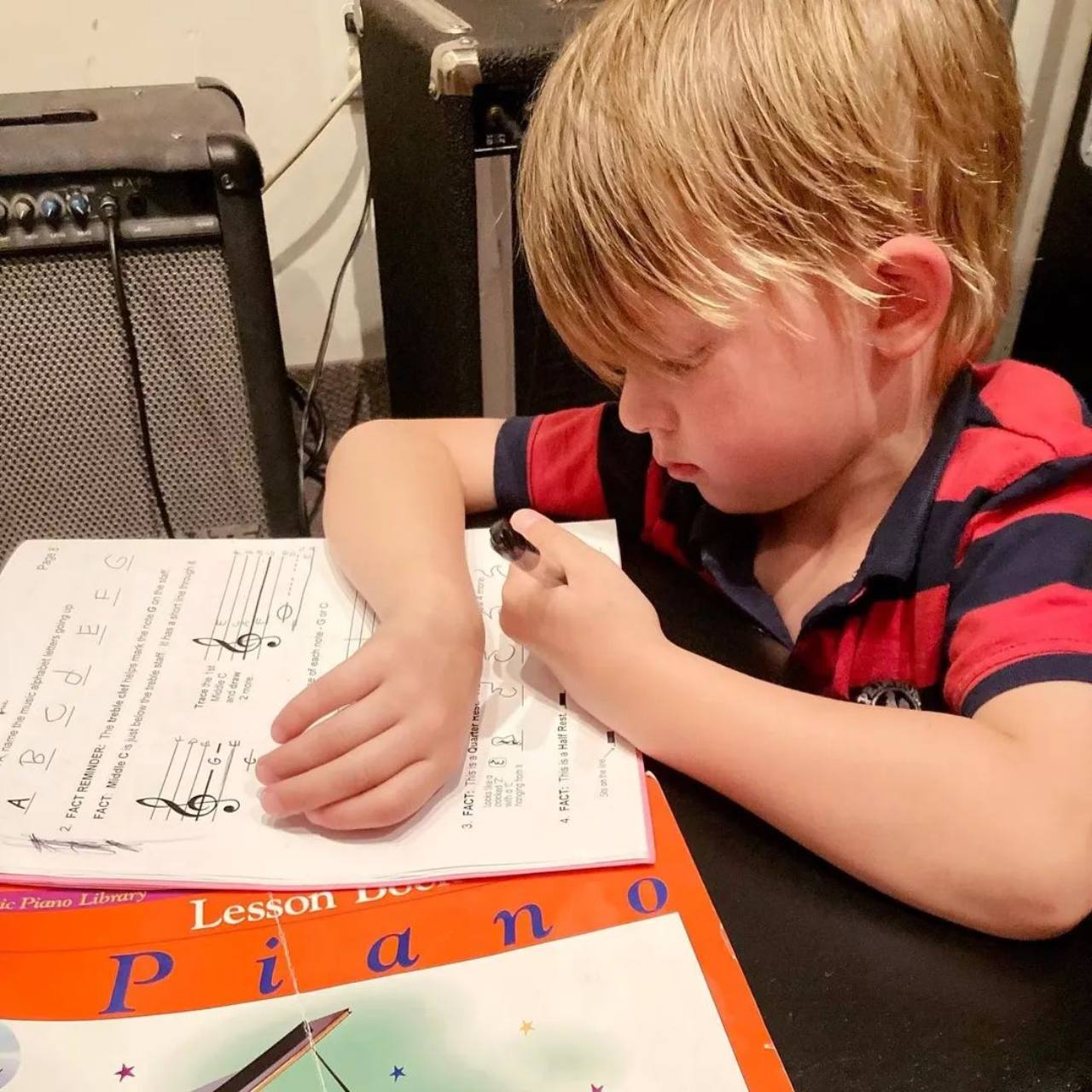
Start with the teacher’s actual assignment
Before deciding that a student is avoiding the work, check whether they know what the work is. “Practice piano” is a large instruction. “Try the left-hand pattern from your lesson, then play the short piece once” is easier to begin.
Ask your child to explain the assignment in their own words. If it is unclear, write down the question for the teacher. Guessing at technique or adding extra exercises can make home practice more confusing than it needs to be.
Make starting less complicated
Look at the practical obstacles. Is the music in a different room? Does finding a cable take longer than playing? Is the instrument stored somewhere the student cannot reach independently? A small change to the setup can remove a surprising amount of friction.
Choose a realistic place in the day for music and revisit it when school or family routines change. A plan that works on paper but conflicts with homework, meals, and sleep will need adjustment. That is a planning problem, not automatically a motivation problem.
Offer choices inside a clear plan
Ownership does not have to mean deciding everything. A student might choose which assigned piece to start with, whether to play before or after a snack, or which small section to show you at the end.
Keep choices genuine and manageable. If both options are acceptable, let the child pick. If something is not optional, explain it plainly rather than presenting a choice you do not intend to honor.
Notice effort specifically
“You went back and tried that transition again” gives a student more information than “You’re a natural.” So does “That ending sounded more settled than it did yesterday.” Describe something you actually heard or saw.
You can also enjoy the music without evaluating it. Ask to hear a favorite part, talk about a song you both like, or let the student play while you listen. Every musical moment does not have to become a progress report.
Take recurring frustration to the teacher
If practice repeatedly ends in tears or arguments, describe the pattern to the instructor. Explain which task gets stuck, how the student responds, and what you have tried. The assignment may need a smaller step, a clearer demonstration, or a different approach.
Avoid deciding from one difficult evening that the student should quit or needs more pressure. Look for the pattern, invite the child’s perspective, and work with the teacher on the next experiment.
The goal is not a perfectly quiet practice household. It is a routine in which a student can begin, make mistakes, ask for help, and experience music as something they are learning to do for themselves.
Have a question about supporting lessons at home? Contact NAMS and tell us what part of the routine is proving difficult.