
Guitar and bass can look similar from across a room, but they often invite a player to listen for different things. Choosing between them is less about which one is “easier” and more about which musical job makes you want to join in.
You can get a feel for that difference before buying an instrument. Put on a song you know well and listen past the lead vocal. What keeps pulling your attention back?
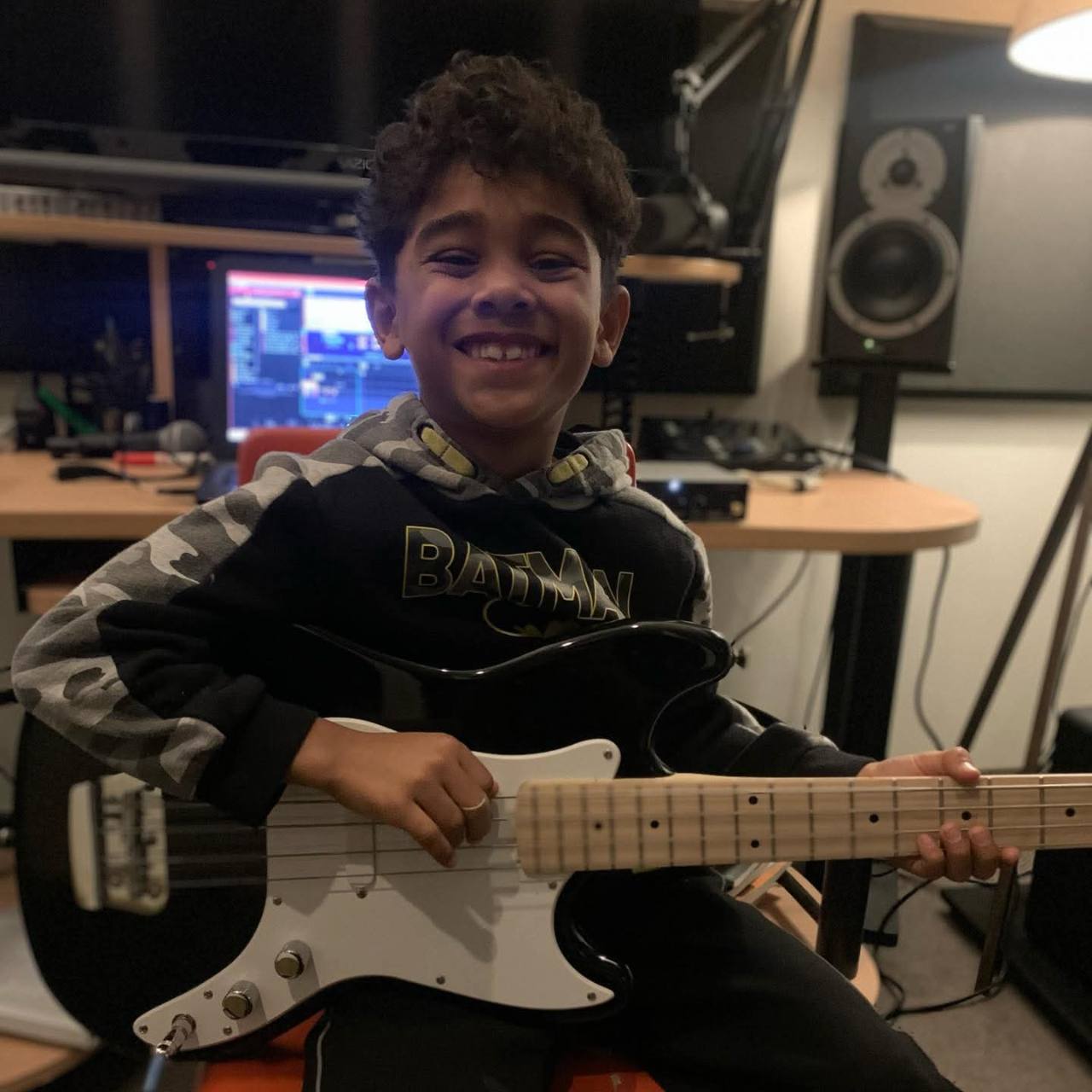
Hear how the bass connects the parts
In many bands, the bass links the rhythmic movement with the harmony. It can support the chords, work closely with the drums, and create a line that gives the song its own shape. A few well-placed notes can make a whole section feel different.
Try listening for the lower pitched line in a recording. Follow it through a verse and a chorus. Does it repeat? Does it change when the chords change? Where does it line up with the drum pattern? You do not need to name the notes to begin noticing those choices.
Hear the different jobs a guitar can take
A guitar may provide chord accompaniment, a recognizable riff, a short answer to the singer, or a featured melody. Sometimes it fills a lot of space; sometimes its most effective contribution is a small repeating part.
Listen to the same song again and follow the guitar. Does it play continuously? Are there separate rhythm and lead parts? Notice how the arrangement changes when a guitar enters or drops out. This can help you identify what you actually want to learn, beyond the name of the instrument.
Try a two-pass listening experiment
Choose one section, perhaps the chorus, and play it twice. During the first pass, tap along and follow the bass. During the second, follow the guitar. Then describe which part you found yourself wanting to imitate.
If you prefer both, that is useful information too. You can talk with a teacher about a starting point and about how the skills might connect later. There is no rule that choosing one now closes the door on the other.
Compare the instruments in your hands
Sound is only part of the decision. Ask about instrument size, string feel, a comfortable playing position, and a suitable setup for a beginner. Instruments vary, so a single uncomfortable example should not decide the whole question.
A teacher can demonstrate a small, realistic first task on each instrument. Notice what feels interesting, not just what works immediately. A new motion can be awkward and still be something you are eager to explore.
Choose the part you want to contribute
Bass is not simply guitar with fewer strings, and guitar is not automatically the more expressive choice. Both can be subtle, rhythmic, melodic, supportive, or adventurous. The music and the player’s choices determine the role.
Think about the situations that appeal to you: accompanying your voice, locking in with a drummer, learning a favorite riff, or playing with friends. Bring those interests to a lesson instead of trying to settle every future possibility in advance.
Visit our guitar lessons and bass guitar lessons pages, or request a free 15-minute mini lesson to talk through a starting point.